


- Why Result Analysis Determines Your Next Success
- Step 1: Decode Your KSET Scorecard Completely
- Step 2: Compare Your Scores with Official Cut-Off Marks
- Step 3: Conduct Deep Paper-Wise Performance Analysis
- Step 4: Identify Pattern-Based Weaknesses
- Step 5: Gather Feedback and External Perspective
- Step 6: Build Your Targeted Improvement Plan
- Step 7: Develop Exam-Day Strategy Based on Experience
- Essential Resources for Your Comeback Journey
- Common Comeback Mistakes to Avoid
- Motivation: Success Stories Start with Setbacks
- The 2026 KSET Calendar: Plan Your Timeline
- Subject-Specific Improvement Strategies
- Leveraging Technology for Improvement
- Health and Wellness During Preparation
- Conclusion: Your Comeback Starts Now
- Frequently Asked Questions (FAQs)
- I missed the cut-off by just 2 marks. How should I adjust my strategy?
- Should I change my subject for the next KSET attempt?
- How many mock tests should I take before the next attempt?
- Is coaching necessary after failing once?
- How do I stay motivated during long preparation months?
- What is the most important change for repeat aspirants?
- Can I prepare alongside my job or other commitments?
Your KSET result is out. The outcome may not be what you expected. You feel disappointed, maybe even frustrated. This feeling is completely valid. However, this moment is not your终点. It is actually your starting point. Consequently, learning how to analyze your KSET result & improve for next attempt transforms failure into preparation. This comprehensive 3000-word guide provides your complete recovery blueprint for NET KSET exam success in 2026.
Why Result Analysis Determines Your Next Success
First, understand this truth: every successful candidate has faced setbacks. Your result contains valuable data. KSET result analysis reveals patterns you cannot see during preparation. Furthermore, it shows exactly where your strategy failed . Therefore, systematic analysis is non-negotiable. It separates those who eventually qualify from those who repeat same mistakes.
The 2026 Opportunity: Fresh Start with Wisdom
Moreover, the next KSET exam cycle offers you an advantage. You have experience. You know the exam hall environment. You understand question patterns. Consequently, you start ahead of first-time aspirants . This guide ensures you leverage that experience fully.
Step 1: Decode Your KSET Scorecard Completely
Your scorecard is your primary diagnostic tool. Do not just glance at pass/fail status. Analyze every component.
Understanding the Scorecard Components
- Paper-wise Marks: Separate scores for Paper I and Paper II
- Sectional Performance: Category-wise marks within each paper
- Total Aggregate: Combined performance indicator
- Category Rank: Your position within your category
- Qualifying Status: Whether you met minimum cut-off
How to Access Your Detailed Scorecard
Visit the official KSET website immediately. Download your complete scorecard. Save multiple copies. Print a physical version for detailed annotation.
Step 2: Compare Your Scores with Official Cut-Off Marks
The KSET cut-off determines qualification. You must understand where you stand.
Category-Wise Qualifying Criteria
| Category | Minimum Aggregate Required | Per-Paper Minimum |
|---|---|---|
| General | 40% | 40 marks each paper |
| OBC/SC/ST/PWD | 35% | 35 marks each paper |
Important Note: Meeting minimum marks does not guarantee qualification. Only top 6% of candidates who appear in both papers typically make the final merit list . Therefore, your target must exceed minimums significantly.
Calculate Your Gap
Subtract your scores from cut-off marks. This gap is your improvement target. Be honest about the size. Small gaps indicate fine-tuning needed. Large gaps require fundamental strategy overhaul.
Step 3: Conduct Deep Paper-Wise Performance Analysis
Now, examine each paper separately. Different problems require different solutions.
Paper I Analysis: Teaching & Research Aptitude
Paper I tests your general teaching aptitude . Break down performance by each unit.
Unit-wise Diagnostic Questions:
- Teaching Aptitude: Did you struggle with educational theories (Piaget, Vygotsky)?
- Research Aptitude: Were research methodology questions challenging?
- Comprehension: Did passages take too much time?
- Communication: Were communication models confusing?
- Reasoning: Did mathematical problems slow you down?
- Data Interpretation: Were graph-based questions difficult?
- ICT: Did digital initiatives questions catch you off guard?
- People & Environment: Were current environmental issues missed?
- Higher Education: Did NEP 2020 questions feel unfamiliar?
Paper II Analysis: Subject-Specific Performance
Paper II requires deeper examination. Your subject mastery is tested comprehensively .
Subject Analysis Framework:
- Core Concepts: Which fundamental topics were weak?
- Advanced Topics: Did higher-level questions cause trouble?
- Application Questions: Were case studies or problem-solving difficult?
- Factual Recall: Did memory-based questions suffer?
- Current Developments: Were recent subject updates missed?
Step 4: Identify Pattern-Based Weaknesses
Beyond unit analysis, identify recurring patterns in your performance.
Common Pattern Categories
Speed-Related Issues:
- Ran out of time in Paper II
- Spent too long on comprehension passages
- Slow on calculation-based questions
- Rushed through last section with errors
Accuracy-Related Issues:
- Many questions attempted but incorrect
- Confusion between similar options
- Misinterpretation of questions
- Careless errors in simple questions
Concept-Related Issues:
- Unable to recall memorized content
- Confused between related theories
- Struggled with application-based questions
- Weak in specific topic areas
Step 5: Gather Feedback and External Perspective
Sometimes, self-analysis misses blind spots. Seek external input.
Sources of Valuable Feedback
- Subject Experts: Consult teachers or coaching faculty
- Successful Candidates: Connect with qualifiers from your subject
- Study Groups: Discuss with peers who appeared
- Online Forums: Share experience on educational platforms
- Workshops: Attend KSET preparation workshops for expert guidance
Our KSET Telegram Community connects you with mentors and successful candidates for personalized feedback.
Step 6: Build Your Targeted Improvement Plan
Based on your analysis, create a specific improvement strategy.
Phase 1: Foundation Strengthening (Weeks 1-4)
For Paper I Weaknesses:
- Re-study all 10 units systematically
- Focus on conceptual clarity over memorization
- Create visual mind maps for each unit
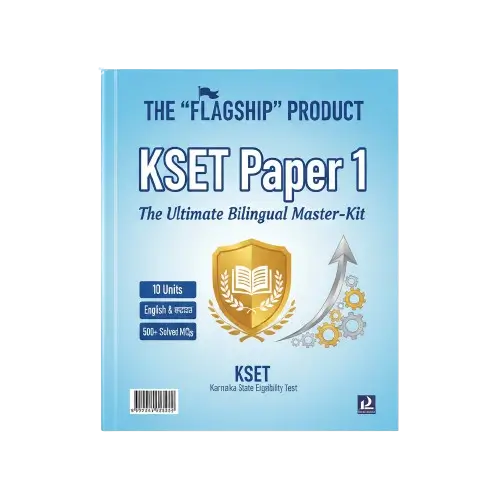
- Use our KSET Paper 1 Guidebook for structured learning
For Paper II Weaknesses:
- Revisit core textbooks for fundamental concepts
- Break syllabus into manageable chunks
- Prioritize high-weightage topics first
- Create topic-wise notes for revision
Phase 2: Practice Intensification (Weeks 5-10)
Daily Practice Routine:
- 50 Paper I MCQs across all units
- 100 Paper II subject-specific questions
- 2 comprehension passages with analysis
- 5 data interpretation exercises
Focus Areas:
- Teaching Aptitude: Master educational theories and classroom management
- Research Aptitude: Understand methodologies, sampling techniques, and ethics
- Logical Reasoning: Practice syllogisms, analogies, and deductions daily
- Subject Application: Solve case studies and problem-based questions
Phase 3: Mock Test Integration (Weeks 11-16)
Mock Test Strategy:
| Week | Tests | Focus |
|---|---|---|
| 11-12 | 2 tests/week | Accuracy building |
| 13-14 | 3 tests/week | Speed + accuracy |
| 15-16 | 4 tests/week | Exam simulation |
After Each Mock Test:
- Analyze every incorrect answer
- Identify recurring mistake patterns
- Update your weak area list
- Adjust study plan accordingly
Phase 4: Revision & Final Polish (Weeks 17-20)
Revision System:
- Weekly revision of all 10 Paper I units
- Subject-wise rapid revision cycles
- Formula and fact sheet review
- Current affairs updates integration
Step 7: Develop Exam-Day Strategy Based on Experience
Your previous attempt taught you about exam day. Now, refine your approach.
Time Management Blueprint
First Hour (Paper I – 50 questions):
- 0-15 min: Teaching & Research Aptitude (15 questions)
- 15-25 min: Comprehension passages (10 questions)
- 25-40 min: Reasoning & Data (15 questions)
- 40-50 min: Remaining units (10 questions)
- 50-60 min: Review marked questions
Next Two Hours (Paper II – 100 questions):
- First 45 min: Easy/confident questions
- Next 60 min: Moderate difficulty questions
- Last 15 min: Difficult/unattempted questions
- Last 5 min: Final review
Strategic Decision Making
No Negative Marking Advantage: The KSET marking scheme has no negative marking . Therefore, attempt all questions. Even educated guesses improve probability.
Question Selection Logic:
- Attempt confident questions first
- Mark uncertain questions for review
- Use elimination technique for difficult ones
- Never leave any question unanswered

Essential Resources for Your Comeback Journey
Choose resources that address your specific weak areas.
Recommended Study Materials
Paper I Resources:
- Standard books like Trueman’s UGC NET/KSET
- Unit-wise focused guides
- Current affairs compilations
- Teaching aptitude workbooks
Paper II Resources:
- Subject-specific standard textbooks
- Previous year solved papers
- Topic-wise question banks
- Scholarly articles for depth
Practice Resources
- Previous Year Papers: 10 years compilation with solutions
- Mock Test Series: Full-length simulated tests
- Topic-wise Tests: Individual unit assessments
- Speed Drills: Timed practice modules
Common Comeback Mistakes to Avoid
Learn from others’ errors. Avoid these pitfalls.
- Superficial Analysis: Glancing at scores without deep diagnosis
- Same Strategy Repetition: Doing same things expecting different results
- Ignoring Paper I: Focusing only on subject while neglecting general paper
- Overconfidence: Assuming small gap means minimal effort needed
- Resource Hoarding: Collecting materials without using them
- Isolation: Preparing alone without feedback
Motivation: Success Stories Start with Setbacks
Every qualified candidate has a story. Many failed before succeeding. Your result is not judgment. It is data. Use it constructively.
Mindset Shift Required
- From “I failed” to “I learned”
- From “This is difficult” to “This is achievable with strategy”
- From “Others are better” to “I can improve systematically”
- From “I wasted time” to “Every hour now counts double”
The 2026 KSET Calendar: Plan Your Timeline
Based on typical exam patterns, plan backward from expected dates.
Tentative Timeline (Check Official Website Regularly)
- Notification Release: July-August 2026
- Application Period: August-September 2026
- Exam Date: November 2026
- Result Declaration: December 2026-January 2027
Your Preparation Timeline
| Phase | Duration | Focus |
|---|---|---|
| Foundation | Now – June | Concept building, weak area strengthening |
| Intensive Practice | July – September | Daily MCQs, topic-wise tests |
| Mock Test Phase | October | Full-length tests, strategy refinement |
| Final Revision | November | Rapid revision, formula review |
Subject-Specific Improvement Strategies
For Commerce Candidates
Focus on accounting principles, business economics, and financial management. Analyze previous KSET commerce paper analysis to identify high-weightage topics .
For English Candidates
Practice comprehension daily. Master literary theories and periods. Use the 20-point preparation strategy including daily MCQs, revision charts, and time-bound mini tests .
For Science Subjects
Strengthen fundamental concepts. Practice numerical problems regularly. Stay updated with recent scientific developments .
Leveraging Technology for Improvement
Use digital tools strategically.
Recommended Digital Resources
- Mobile Apps: Study on-the-go with educational apps
- YouTube Channels: Visual learning for complex topics
- Online Courses: Structured guidance from experts
- PDF Resources: Quick access to study materials
Tracking Your Progress
- Maintain study tracker spreadsheet
- Record daily MCQ accuracy percentages
- Chart mock test score progression
- Update weak area status weekly
Health and Wellness During Preparation
Your physical and mental health直接影响 performance.
Essential Wellness Practices
- Sleep: 7-8 hours daily for memory consolidation
- Exercise: Regular physical activity for stress management
- Nutrition: Balanced diet for sustained energy
- Breaks: Short intervals between study sessions
- Social Connection: Stay connected with supportive people
Conclusion: Your Comeback Starts Now
Your KSET result is not the end. It is valuable feedback. You now know exactly how to analyze your KSET result & improve for next attempt. The path is clear. The strategy is proven. The resources are available. Your determination is the only missing piece.
Start your comeback journey today. Get Luminous Leaf Publication’s comprehensive KSET preparation kit with bilingual guides, topic-wise question banks, and full-length mock tests designed specifically for recovering aspirants. Join our Telegram community for daily motivation, expert guidance, and peer support from fellow candidates on the same journey. Your qualification in 2026 is not just possible—it is planned.
Frequently Asked Questions (FAQs)
I missed the cut-off by just 2 marks. How should I adjust my strategy?
Small gaps indicate minor issues. Focus on accuracy in your strong areas. Identify 2-3 weak topics and master them completely. Practice time management to ensure you attempt all questions confidently. Small improvements in multiple sections will bridge this gap.
Should I change my subject for the next KSET attempt?
Subject change is rarely necessary. Your master’s degree determines eligibility. However, if your subject has consistently low pass percentages and you struggle with core concepts, consider whether your preparation approach needs overhaul rather than subject change
How many mock tests should I take before the next attempt?
Aim for 20-25 full-length mock tests minimum. Start with one weekly, increase to 3-4 weekly near exam. Quality analysis after each test matters more than quantity. Track patterns across tests for continuous improvement
Is coaching necessary after failing once?
Not necessarily. Self-study with structured resources works for many. However, if your analysis shows conceptual gaps in specific areas, targeted coaching or subject-specific workshops can help. Our guides provide equivalent structured guidance
How do I stay motivated during long preparation months?
Break your journey into small milestones. Celebrate weekly achievements. Connect with supportive peers. Read success stories of candidates who qualified after multiple attempts. Remember: your previous attempt was practice for this successful one
What is the most important change for repeat aspirants?
Honest self-assessment and strategy modification. Doing exactly what you did before guarantees same results. Identify what didn’t work, change it systematically, and maintain what worked. This targeted approach transforms preparation effectiveness
Can I prepare alongside my job or other commitments?
Absolutely. Many successful candidates balance work and study. Create realistic daily schedules with 3-4 focused hours. Use weekends for intensive practice and mock tests. Quality of study matters more than quantity